
Loading...
Serving Windsor, CA and surrounding areas. (707) 687-4981
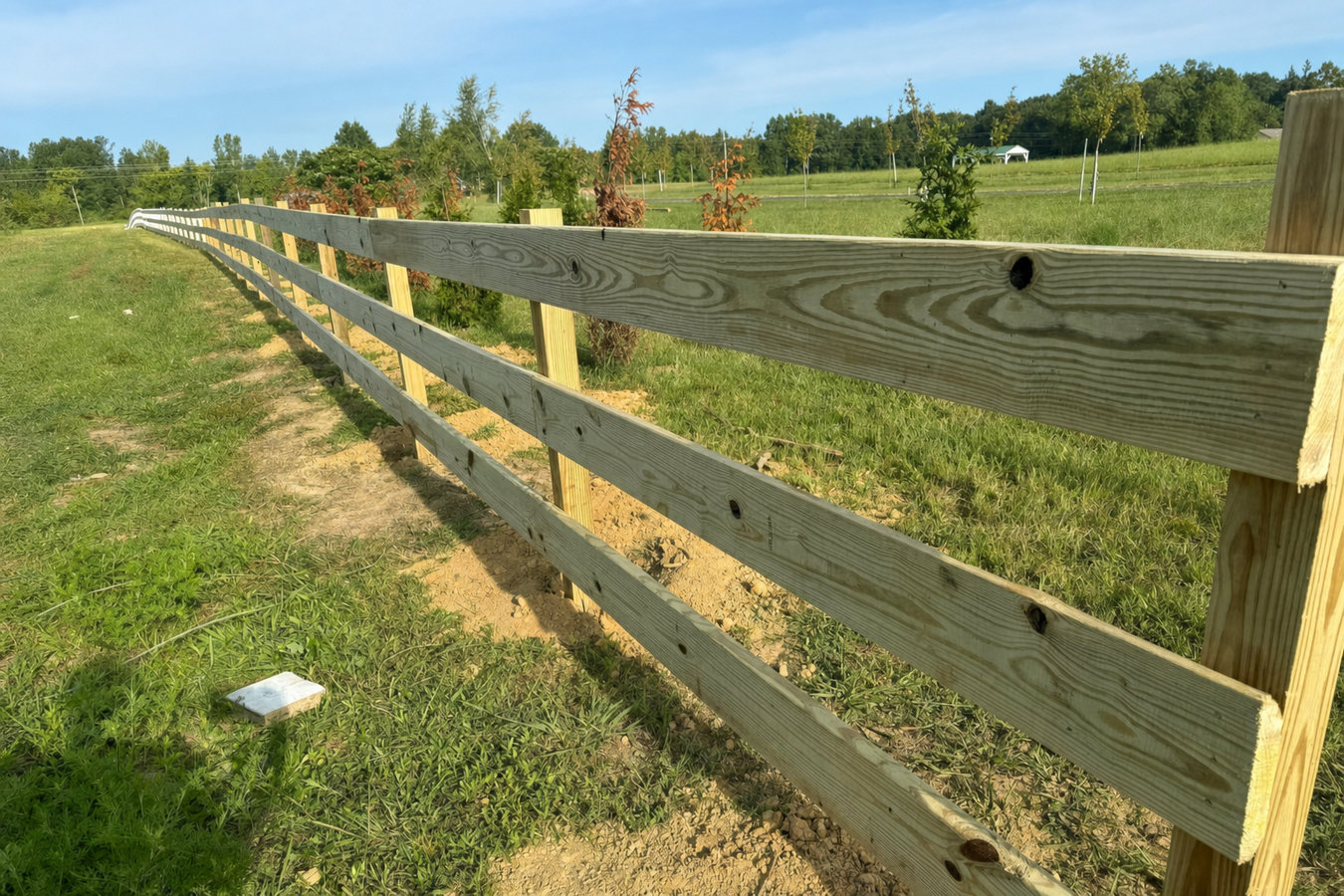
Woven wire, high-tensile, wood post-and-rail, and livestock panels - each fencing type matched to your animals, your terrain, and Windsor's demanding clay soils and deer pressure.
Farm and ranch fencing in Windsor, CA means choosing the right fence type for your specific animals and land - woven wire for general livestock, smooth high-tensile for horses, wood post-and-rail for paddocks and paddock perimeters - with posts set for Sonoma County clay soils and timelines that work around Windsor's dry-season installation window.
The right fence for your property depends on what you are keeping in, what you are keeping out, and how much land you are working with. A fence built for horses is very different from one built for goats, and a fence that just marks a property line is different from one that needs to stop deer. Getting this match right from the start saves you from expensive repairs or replacements down the road. If your property has a mix of working land and residential areas, our pet and dog fencing service covers the yard and enclosure side while farm fencing handles the larger property perimeter.
Post depth and corner bracing matter more on farm fencing than most homeowners realize. In Windsor's clay soil, posts that are not set deep enough or properly anchored will lean within a few wet-dry seasons. We set posts to the depth local conditions require, not just the minimum that meets a general spec.
If you walk your fence line and notice posts tilting or lifting slightly out of the soil, the foundation of your fence is failing. In Windsor's clay soils, this often happens after a wet winter followed by a dry summer - the soil swells and shrinks repeatedly until posts lose their grip. A leaning post puts stress on the entire fence line and can lead to a section collapsing.
Fence wire that hangs loosely between posts or bows outward is no longer doing its job of containing animals or marking a boundary. This kind of wear happens gradually and is easy to overlook until an animal gets through. Walk your fence line at least once a season and look for sections where the wire is not taut and even.
If you are finding deer tracks, damaged plants, or signs of animals crossing your fence line, your current fence is not tall or strong enough to deter them. This is a common issue for Windsor properties near open space or the Laguna de Santa Rosa area. Addressing this usually means either raising fence height or switching to a design specifically intended to stop deer.
If you are bringing horses, goats, sheep, or other livestock onto land that currently has only a basic perimeter fence or no fence at all, you need fencing built specifically for those animals before they arrive. What works for cattle will not work for goats, and what works for goats will not work for horses. Getting the right fence in place before the animals arrive is far easier than retrofitting after.
We install woven wire field fence for general livestock containment across larger open areas, smooth high-tensile wire for horse pastures where barbed wire would be a safety risk, barbed wire for cattle and perimeter lines where horses are not a concern, and wood post-and-rail for paddocks and areas where appearance matters alongside function. Every fence type is built with the gate hardware and corner bracing that the application requires - not shortcuts that look fine on day one and fail within a season.
For properties dealing with deer, we discuss fence height and design before materials are ordered. Standard livestock fencing is not tall enough to stop a determined deer, and retrofitting height later costs more than building it right the first time. For utility and boundary perimeters where low cost per linear foot matters most, our chain link fence installation service is a durable option that handles large runs without the maintenance demands of wire fencing.
Best for containing general livestock across open areas - evenly spaced wire that keeps animals in without the injury risk of barbed wire.
The safest choice for horse pastures - smooth wire at proper height with no barbs that could injure a horse testing the fence.
Widely used for cattle perimeters and property lines on larger agricultural parcels where horses are not present.
A classic choice for paddocks and areas where the fence is visible and appearance matters alongside function.
Heavy-duty steel panels for corrals, loading areas, and sections that need to handle direct animal pressure repeatedly.
Taller fence designs built specifically for Windsor properties near open space where deer pressure makes standard heights ineffective.
Windsor and the surrounding area have seen steady growth in smaller agricultural parcels - properties that are part residential, part working land, with horses, goats, chickens, or small vineyards. The mix of functional livestock fencing and aesthetically minded perimeter fencing that these properties require is something local contractors here deal with regularly. Windsor sits in the middle of Sonoma County wine country, and the same clay-heavy soils that help grow grapes are the soils fence posts have to hold their ground in through repeated wet winters and dry summers. Homeowners in Cloverdale and Healdsburg face the same soil and deer conditions, and we regularly work in both communities.
The late spring through early fall window is the most reliable time to install farm fencing in Windsor. The ground is workable and dry enough for posts to be set firmly without the risk of shifting before they stabilize. Deer pressure is a real and ongoing challenge for properties near the Laguna de Santa Rosa watershed and adjacent open space - and it is worth discussing before the fence is designed, not after it is built.
For guidance on fencing best practices specific to Northern California agriculture, the University of California Agriculture and Natural Resources publishes research-based recommendations on livestock fencing suited to local soils and climate. Permit and land use questions for properties outside Windsor town limits are handled by Permit Sonoma.
We ask about how much fencing you need, what the fence is for, and whether you have a recent property survey. We respond within 1 business day and can give you a rough ballpark before we visit - but a firm price requires a site walk.
We walk the fence line with you, check terrain and obstacles, and ask about your goals - deer pressure, specific animals, gate locations, or sections where the current fence is failing. You receive a written estimate that breaks down materials and labor.
We determine whether your project requires a permit through the Town of Windsor or Permit Sonoma and handle the application if needed. Spring and summer are the busiest seasons in Windsor, so we agree on a start date that gives both sides enough runway.
The crew marks post locations, sets corner and gate posts first, then runs wire or rails. Depending on project size, work may take one day or several. We do a final walkthrough with you to check post plumb, wire tension, and gate operation before leaving.
We walk your land before quoting - no phone estimates, no surprises on the final bill. We respond within 1 business day.
(707) 687-4981Sonoma County's clay-heavy ground swells in winter and shrinks in summer, and a fence that is not set with that in mind will start leaning within a few years. We set posts to the depth local conditions require and use concrete footings at corners and gates - not just the minimum that meets code.
Properties near Windsor's open spaces and the Laguna de Santa Rosa corridor deal with deer pressure that standard fencing cannot handle. We discuss deer requirements before ordering materials so your fence is designed to actually do the job - not retrofitted later at additional cost.
Farm fencing on agricultural parcels involves navigating both Town of Windsor and Permit Sonoma rules depending on your property's location and zoning. We know which office applies to your parcel and handle the permit research and paperwork so you do not have to figure it out yourself.
Windsor's mix of flat valley floor and hillier terrain means no two properties fence the same way. We do not quote without walking your land. The number on your written estimate is based on what we actually saw - so the final bill matches what you were told.
A well-built farm fence on Windsor soil, properly permitted where required, is an investment that should hold for 20 years or more with basic seasonal maintenance. Every job we do is built to that standard - not to the minimum that passes a quick inspection.
Need a secure yard enclosure for dogs rather than livestock? We build pet-specific fencing sized and gated to keep your animals in safely.
Learn MoreChain link is a durable, low-maintenance option for larger property perimeters and utility areas on farm and rural residential lots.
Learn MoreGet a free on-site estimate before the dry season rush. We walk your property, answer your questions, and give you a written quote with no obligation.